
The Afterlife of Fascism Defeated
Oswald Mosley, by Central Press, October 4, 1936. [National Portrait Gallery, London]
On October 4, 1936, columns of young men in matching Blackshirt uniforms marched toward Jewish neighborhoods, chanting and giving Roman salutes with the intent of whipping up antisemitic street violence at the behest of their fascist leader. This assault took place not in Berlin, Madrid, nor Rome, but rather in London.
This past month marked the 90th anniversary of the Battle of Cable Street, a series of street clashes between Oswald Mosley’s British Union of Fascists (BUF) and working-class anti-fascists in London’s East End. Mosley, perhaps more famous today for his portrayal in Peaky Blinders, was copying the street violence made famous in Adolf Hitler’s Germany. On Cable Street, however, Mosley’s Blackshirts met a wall of anti-fascist resistance. Their defeat and the British government’s subsequent banning of uniformed political marches are often used to mark the end of Mosley’s brand of interwar British fascism. Though it is true that Mosley remained politically sidelined after 1936, he did not disappear. Long overlooked, Mosley’s post-Cable Street political afterlife offers a warning about the flexibility of fascist ideology and the ways that hateful figures like Mosley can adapt, even when pushed to the margins and rejected as an electoral force.
Oswald Mosley took a circuitous path to leading antisemitic marches through London’s East End. Though he began life in the typical milieu of the oldest son of a wealthy, aristocratic family, it was military service in the First World War that set off his political development and laid the foundation for his later radicalism. He served in the trenches of the Western Front and in the Royal Flying Corps, later arguing that using futuristic aviation technology was vital to his conversion to fascism. In 1918, a 22-year-old Mosley was first elected to Parliament as a member of the Conservative Party. Mosley shifted significantly to the left through the 1920s, crossing over to the Labour Party and later declaring himself a public supporter of John Maynard Keynes’ economic theories. The failure of the British government to actively respond to the Great Depression and the Labour Party’s narrow rejection of his “Mosley Memorandum” in 1930 — calling for Keynesian intervention through state spending and high tariff walls around the British Empire — led Mosley to found the New Party in 1931. The New Party developed from Mosley’s conclusion that traditional political parties were fundamentally unable to address mass unemployment caused by the Depression. Though the party initially drew some support by articulating an interventionist economic policy and calling for Parliamentary reform, it was torn between contradictory socialist and fascist currents. The few candidates it ran in the 1931 General Election lost. After this defeat, Mosley’s politics became increasingly authoritarian and openly fascistic. Seeking to emulate Mussolini’s futurist strongman politics, he relaunched the New Party as the British Union of Fascists.
A violent 1934 rally in London’s Olympia exhibition hall dissolved the BUF’s early momentum, and prominent supporters such as Daily Mail publisher Lord Rothermere turned against the party as the realities of fascist violence became clear. In an attempt to rescue his faltering movement, Mosley embraced more virulent antisemitism. That year, the BUF began marching into the Jewish neighborhoods of East London while calling for Jewish Britons to be expelled from the country. Two years later, Mosley married Diana Mitford, whose famous sisters included two writers, a future duchess, and a fellow fascist who would shoot herself in the head when the U.K. declared war on her dear friend Adolf Hitler’s Germany. The Mosley-Mitford wedding took place in Nazi propaganda minister Joseph Goebbels’ home with Hitler in attendance.
The plan for what became the Battle of Cable Street was for BUF Blackshirts to march from near the Tower of London through the significantly Jewish neighborhoods of Shoreditch, Bow, and Bethnal Green before ending in Whitechapel, of Jack the Ripper fame. At each planned stop, Mosley was to give speeches to his assembled followers, flexing the strength of his movement. Instead of projecting power, however, the event showed the movement’s weakness. The BUF marchers met barricades and chants of “They shall not pass” — inspired by the Spanish anti-fascist slogan “No Pasarán” — as violent clashes broke out. Protesters boxed in the BUF on Cable Street before Mosley even spoke once, and the mounting mayhem led the police to call off the march.
Two months after this debacle, the British government passed the Public Order Act 1936 banning uniformed marches. The BUF, which only two years earlier had boasted 50,000 registered members, was now solidly confined to the political margins. Over the following years, Mosley continued to hold antisemitic rallies and advocate for a British alliance with Hitler, but BUF membership did not recover and Mosley was increasingly viewed as a traitor for his pro-German views. In May 1940, he was detained and interned by the British government, which was fearful of a BUF fifth column in case of a German invasion. Mosley remained imprisoned until 1943, when the war was turning in Britain’s favor and prominent domestic fascists were deemed no longer a public threat.
Mentions of Mosley’s political life in public memory or scholarship normally do not look beyond World War II. However, even after Cable Street, internment, and the Axis defeat, the question for Mosley was not if he would continue his political activity, but how he could adapt fascism to a new environment. This political chameleon, who had drifted from right to left and decisively back to the far right, again sought to redefine his political movement, however small and marginal. At the outset, that meant rebranding: the British Union of Fascists was reborn as the “Union Movement” in 1948. Not only did his political party lose British from its name, but his vision moved from a nationally based political party to one much broader in scope.
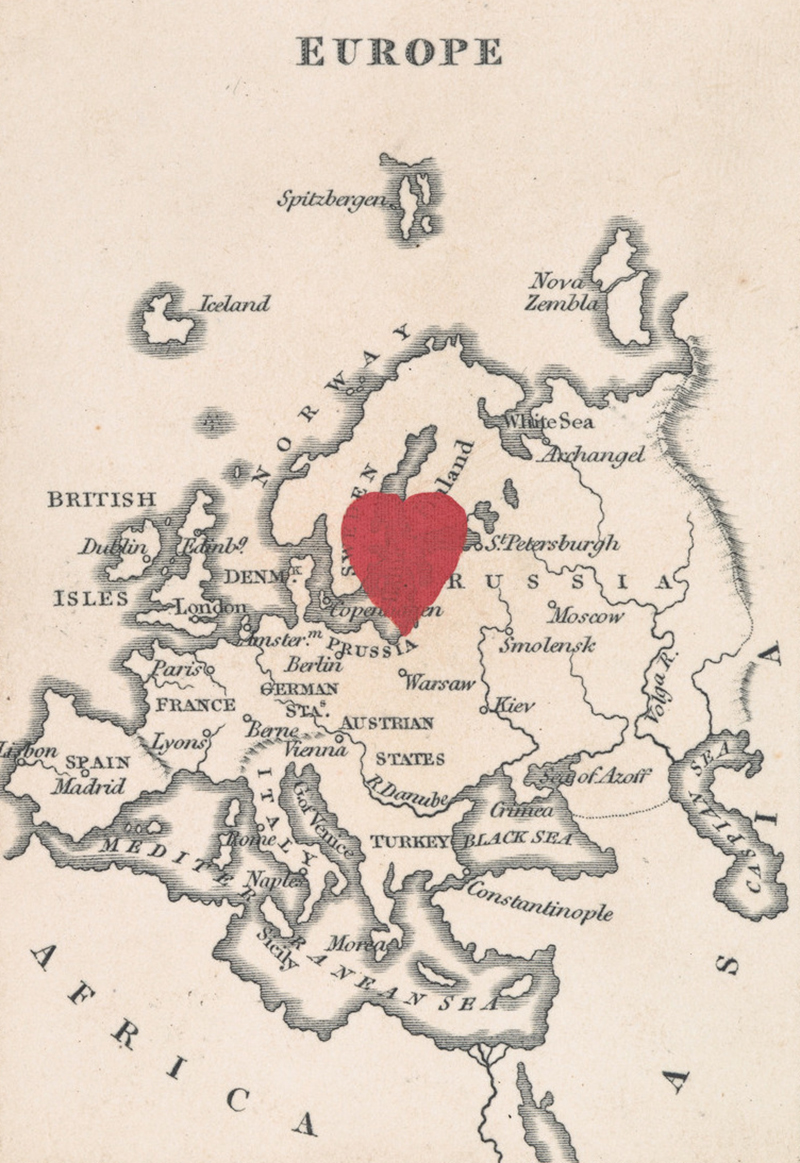
First elaborated in his 1947 book The Alternative, Mosley’s postwar politics would be defined by his vision of “Europe a Nation and Africa the Empire of Europe.” Throughout the next decade, culminating in the publication of 1958’s Europe: Faith and Plan, his entire political worldview came to turn on the issue of European unity. What Mosley termed his core “Idea” was a conception of the full integration of Europe into a single state. This was a profoundly radical vision of European integration, proposing the total elimination of independent European countries through their collective incorporation into a single “Union State” led by “the Leader.” Mosley argued that nationalism had doomed fascism by sparking European infighting, severing the fundamental cultural links between all white, Christian, Europeans. “Europe a Nation” portrayed the essential cultural unity of all Europeans as the foundation for political unity, with “Europeans” — rather than Aryans, Britons, or Germans — acting as the vital agents of history.
Mosley linked a consolidated European government to his economic proposal for “European Socialism,” a form of autarkic, corporatist economic relations rooted in industrial democracy. For any voter to have electoral representation in Mosley’s Europe, they would have to work in an industry; votes would be allocated based on employment sectors. Liberal democracy was deemed inadequate for the “New Age,” since its emphasis on individualism left Europe perpetually vulnerable to the “Asiatic” Soviet Union. Fundamentally, his political vision was a rearticulation of fascism through a European lens, decentering traditional nationalism for an abstracted European identity while maintaining a sense of crisis, fear of decline, and emphasis on a strong leader: a repackaged Third Reich clothed in the language of Europeanness.
“Europe a Nation” was as much about reinventing empire as of securing a form of European union. Developing his views through contact with figures in apartheid South Africa like Oswald Pirow, the former leader of the pro-Nazi political party the New Order, Mosley argued for the simultaneous unification of all European colonial holdings in Africa into a single colony. That reconfigured colony was to be divided between areas of white and Black settlement under a continental apartheid system. This imagined division would simplify the exploitation of African primary resources to support European economies, staving off independence movements and communist infiltration. Having Africa as a captive to exploit for primary resources to be processed by European factories was also necessary to create the autarkic Eurafrican zone imagined by “European Socialism” free from Soviet or American influence. At its most extreme, Mosley and some supporters of “Europe a Nation” argued for the adoption of German architect Herman Sörgel’s Atlantropa, a 1929 plan to dam the Strait of Gibraltar in order to reduce the sea level of the Mediterranean and to make new lands available for European settlement. This embrace of massive environmental engineering was tied to Union Movement proposals for a technofuturistic, joint European-African power grid, envisioning a single space for development.
Mosley’s destroyed public reputation following the defeat at Cable Street and his wartime internment left him beyond the pale of mainstream political life in postwar Britain. With the exception of the Communist Party of Great Britain, which recognized “Europe a Nation” as fascism in other clothing, Mosley’s ideas were largely ignored, and the Union Movement proved to be a complete electoral failure. The relative highpoint of Mosley’s postwar political influence came in 1959, when he ran for Parliament in North Kensington with the slogan “Keep Britain White,” used by the Union Movement in the Notting Hill race riots there a year prior. Promising the expulsion of non-white migrants alongside the union of Europe, Mosley secured 8% of the vote. This result, though low, previewed an increasingly vocal politics of race that would become part of the British mainstream in the 1960s, outflanking Mosley and limiting his potential appeal. More broadly, the Union Movement’s complete inability to run candidates or to develop a party apparatus under Mosley’s incompetent leadership meant his Europeanized fascism remained extremely marginalized.
Yet, marginalized did not mean defeated. Mosley had an underappreciated influence on the subsequent development of far-right politics in Europe as an ideologue of a repackaged European fascism. In an effort that began almost immediately after World War II and continued for the rest of his life, he spread the gospel of European unity across the continent’s far right by lending clandestine financial support to publications like the German-language Nation Europa and facilitating contacts between transnational fascists. Writers for Nation Europa represented a who’s who of postwar fascism, with the journal — its name a German translation of “Europe a Nation” — an important discursive space for the development of a transnational far right committed to a vision of European union. Mosley’s wealth and stature as a surviving fascist party leader meant his voice was a significant one in this space. His regular contributions to Nation Europa helped set the tone for the publication, which combined Holocaust denial with historical revisionism presented through a language of European unity.
This reality clashes with British public memory, where Mosley’s postwar political life drifts into oblivion despite his continued influence on the far right. Remembered primarily for leading the failed BUF, he transforms into the benign and bumbling inspiration for P.G. Wodehouse’s Roderick Spode — a laughingstock that contrasts to more successful fascist leaders. Mosley’s portrait today hangs in London’s National Portrait Gallery and Mosley’s biographer Robert Skidelsky made the controversial case that Mosley was perhaps the misunderstood Keynesian savior of Britain during the Great Depression. Depictions of Mosley and British fascism in recent media, from TV shows Peaky Blinders and Outrageous, to Kate Atkinson’s new novel Our Noble Selves, oscillate between sinister and absurd, furthered by his association with the vibrant and dynamic Mitford sisters. Somewhere between these two poles lies the reality of Mosley’s forgotten postwar political career.

The victory at Cable Street is rightly celebrated as a moment of real, popular anti-fascist resistance, backed up by legislation that helped to resoundingly defeat interwar British fascism as a domestic political force. But Mosley didn’t disappear from politics after his release from internment, and neither did those influenced by his vision. The transnational fascist networks that Mosley helped cultivate echo down to our contemporary moment, having laid important ideological groundwork for parties such as Giorgia Meloni’s Fratelli d’Italia, Marine Le Pen’s Rassemblement National, and the Sweden Democrats. Their political ancestors corresponded with and benefitted from the financial support Mosley gave to Nation Europa. Mosley’s influence is visible in Meloni’s focus on working within the European Union, and in her articulation of a far-right Europeanism that critiques liberalism while reorienting European institutions towards reactionary political ends.
Mosley’s postwar trajectory offers a case study of fascism’s flexibility in the face of opposition. Even when defeated, discredited, and marginalized, fascists do not simply “go away.” The 21st century postscript to Mosley’s story also highlights the uncomfortable reality that there is no inherent antagonism between the European Union and the far right. Winning a battle does not mean winning the war.