
Where Did the Myth of the Victorian Prude Come From?
Victoria Regina, by Henry Tanworth Wells, 1887. [Tate]
“In olden days, a glimpse of stocking was looked on as something shocking,” sang Cole Porter in the 1930s. “But now, God knows, anything goes!”
When people in the 21st century think of the Victorians in 19th-century Britain, they usually imagine a prude. Visions of top hats float before their eyes, accompanied by anecdotes about people being so scandalized at the thought of unexpectedly seeing an ankle that they chose to cover their table legs. These conjured Victorians are easily shocked, sexless, and utterly repressed.
References to uptight Victorian morality are commonplace. Novelists pass comment on “the prudish Victorians with their empire and inventions,” politicians write books praising the “moral purpose” of Victorian men, and influencers can casually utter “that’s so Victorian” to describe an uptight, outdated, moralistic approach. Whether in discussions of how many sexual partners we have today compared to the past, or 19th-century Ancient Greek dictionaries full of euphemisms for crude language, we seem pretty certain that the Victorians were squeamish when discussing sex. But this is simply not true.
Sex was clearly visible in the streets of major cities in Britain and the Empire, and openly discussed. Police estimates of how many women sold sex in London ranged from 5,500 to 7,100 between 1858 and 1868, but morality campaigners often estimated up to 80,000 in London alone. (The ones maintaining order often played down the figure, and the ones trying to shock others into donating money to their cause often overestimated.) In the Cremorne Gardens in Chelsea, couples could meet illicitly for not-so-secret trysts among the drunken crowds; in Mayfair’s Burlington Arcade, men cruised for young male companions; and in the pages of Matrimonial News, readers placed personal advertisements looking for romantic connections.
A dildo made of India rubber was “the only true artificial prick,” according to a British sex manual from around 1885 called Love and Safety or Love and Lasciviousness with Safety and Secrecy. The book explained that “the india rubber shaft, when dipped in warm water to bring it to blood heat, is sufficiently soft and elastic to titillate the female seat of pleasure.” It even encouraged its female readers to add a ring of rubber to the sex toy to mimic the head of the penis and thicken it with condoms that they should: “place round the thick end, an inch from the top … Now you will have a dildoe exactly resembling in feel and effect a prick.” The manual explained how effective this would be to “satisfy the passions, the loves, the lust of the women,” as Anjali Arondekar explains in her 2009 book, For the Record: On Sexuality and the Colonial Archive in India.
Sex toys like this were popular in Victorian Britain. From the 1850s onward, dildos made from India rubber were a notable trade. Arondekar explains that their popularity was “difficult to keep secret,” according to an 1892 article in the journal India Rubber World, and they were sold in “a stealthy, shame-faced way” in Britain and made in factories with “windows draped so the outside world cannot peer in.” The dildos themselves were expensive, luxury goods, including one ivory dildo from an elephant shot in 1840s India sold at an Irish auction in 2017, but pictures of dildos like these were common in Victorian pornography that was far easier to mass produce. So where has this myth of repressed Victorian Britain come from? And why has it remained?
The truth was that there were Victorian prudes, and they sought to exert their censorship power over British society and the empire writ large, often ineffectively. Those opposed to prudery bear some of the responsibility for building the myth; they were much more compelling to read than the opposing side, and effective in creating the image of a ubiquitous annoyance. Victorian novelists often made references to the imagined “Mrs. Grundy” when discussing any sort of middle-class moral complaint. She served as a satirical caricature of priggishness, a way of making puritanism seem ridiculous, outdated and the preserve of old ladies, rather than the modern, steam-powered Victorians. After The Picture of Dorian Gray was lambasted as immoral, Oscar Wilde wrote a letter to the St. James’s Gazette in 1890, saying that England was a free country and that any critics of his novel were sour-faced Mrs. Grundys, clucking around trying to tell people what to do. He also pointed out that the public were far more likely to read his book after being told “that this is a wicked book that should be coerced and suppressed by a Tory Government.”
Those stories about trousers on furniture were originally only satirical, a way for British writers to mock what they saw as the overly fussy morality of Americans. As historian Matthew Sweet points out in his 2001 book Inventing the Victorians, the image came from Diary in America, an 1839 diary from the English Captain Marryat that frequently veered into satire. The writer joked about having visited an American boarding school for young ladies where the mistress showed her “extreme delicacy” by covering each leg of the piano-forte with little trousers. A joke mocking ridiculous attempts to avoid “corrupting” middle-class young women was eventually repeated enough that it was transformed into historical anecdote.

Exaggerating the threat of the easily offended was also a great way to make a public figure look more open and modern. In 1877, when famous collector Henry Spencer Ashbee was putting together his catalogue of erotica, he maintained that British society upheld “an ultra-squeamishness and hyper-prudery peculiar to itself.” A young Winston Churchill wrote in an 1894 letter to the Westminster Gazette — his first piece in a national newspaper — that “in England we have too long obeyed the voice of the prude.” Both were criticizing morality campaigns, such as those who fought for the 1857 Obscene Publications Act, as a way to call for “free speech” — and advance their own careers through a rallying cry to “fight prudery.”
The prudes may have been a minority, but they tried very hard to control the majority. Legislation like the Obscene Publications Act gave police the right to search homes and seize “obscene” materials. In practice, the law only affected material that would end up in the hands of the masses, rather than in the libraries of educated gentleman; an 1868 court decision clarified that it only applied to material that could “corrupt those whose minds are open to such immoral influences.” In other words, published material would only be treated as a controlled substance if it were likely to be available to women or the working classes. That did little to stop these groups from trying to access publications said to corrupt them.

The record of one renowned court case shows how eager British people were to get their hands on sexually explicit material. It involved Annie Besant and Charles Bradlaugh, who in 1877 were prosecuted for publishing a “dirty, filthy book” that gave advice on contraception (how to use condoms, the ineffectiveness of the withdrawal method, and some less helpful advice on using laxatives to cure male impotency). Bradlaugh and Besant — whose guilty verdict was eventually overturned — had sold 500 copies in the first 20 minutes and an estimated 125,000 in the three months leading up to their trial. Leading political figures may have believed they knew what was best for the public — hence their campaigns against homosexuality, alcohol, and the “solitary vice” of masturbation.) But citizens clearly had different desires, and those desires included filth.
This filth was often shipped in from across the Empire. Pornography depicting the supposedly debauched sex lives in other parts of the world was particularly popular; new camera technology allowed photographs of naked “savages” to be easily sent back to Britain. These colonial subjects had often been paid or pressured by the photographer to remove their clothes. In the British Empire, colonial administrators, military officials, scientists and doctors, all created a sexualized understanding of non-white populations that meant they were disproportionately accused of selling sex. Believing them to lack prudery easily became a way to justify the mistreatment of non-white women, and the state’s paternalistic desire to try to control the sexuality of women and the working classes was easily exported abroad.
Across Britain and the Empire from the 1850s to 1860s, a series of laws called the Contagious Diseases Acts were passed to try to make prostitution safer and to limit the spread of venereal diseases. The legislation was introduced to allow sailors and soldiers to be able to buy sex easily, from women kept in brothels and subjected to regular health checks; all registered “prostitutes” — or just those accused of selling sex — were held legally responsible for any STDs, forced to register with the police and undergo weekly genital examinations to look for signs of infection.
Colonial and military authorities acted on the incorrect assumption that almost all colonized women were shameless potential prostitutes, and thus should be subject to the Acts. In Hong Kong in the 1870s, a senior civil servant at the colonial office stated categorically that 75% of Chinese women were prostitutes. In the 1881 census of Bengal, all unmarried women over the age of 15 were categorized as “prostitutes.” And in Australia in the 1890s, settlers in Queensland thought that all of “the Gins [first nations Australian women] are simply prostitutes.” When discussing Indian women, legislators in Britain claimed they would have no objection to the medical examinations, scholar Ashwini Tambe notes in her 2009 book Codes of Misconduct, because they did not the same shame around their bodies as Englishwomen, since the “special sensibility about corporeal examination” did “not exist in Indian women.”
Women’s right campaigners were furious, and embarked upon an extensive campaign against the Contagious Disease Acts. As they saw it, these laws functioned primarily to entrench existing hierarchies. The campaigners were especially disgusted by the mandated genital examinations that often required a speculum, which they described as “steel rape.” As the revolutionary reformer and campaign leader Josephine Butler put it in 1871, “these Acts secure the enslavement of women and the increased immorality of men.” Though their efforts bore fruit in 1886, when the Contagious Diseases Acts were finally repealed in Britain, the laws remained in place in other parts of the British Empire. Their British opponents would continue their efforts to abolish those laws, well into the early 20th century.
During their campaign, Butler and her supporters were treated as appalling, uncontrolled women for speaking openly about sex. One journalist called Butler “a shrieking sister, frenzied, unsexed, and utterly without shame,” and the MP Sir James Elphinstone said she was “worse than the prostitutes.” In subsequent years, the women who fought to defend sex workers from legalized sexual assault would be lumped into the same category as paternalistic morality campaigners trying to tell the masses what to do. Politicians like Winston Churchill (who famously tore down the barricades in Leicester Square put up by anti-prostitution campaigner Laura Ormiston Chant, one of the prudes he objected to in his letter above) and many historians in the socially liberal 20th century (like Ronald Hyam) portrayed them as being part of the Social Purity movement, another group of moralizing Mrs. Grundys trying to tell people what do. These revolutionary women were invoked as proof that Victorians were sexually frustrated old prudes.
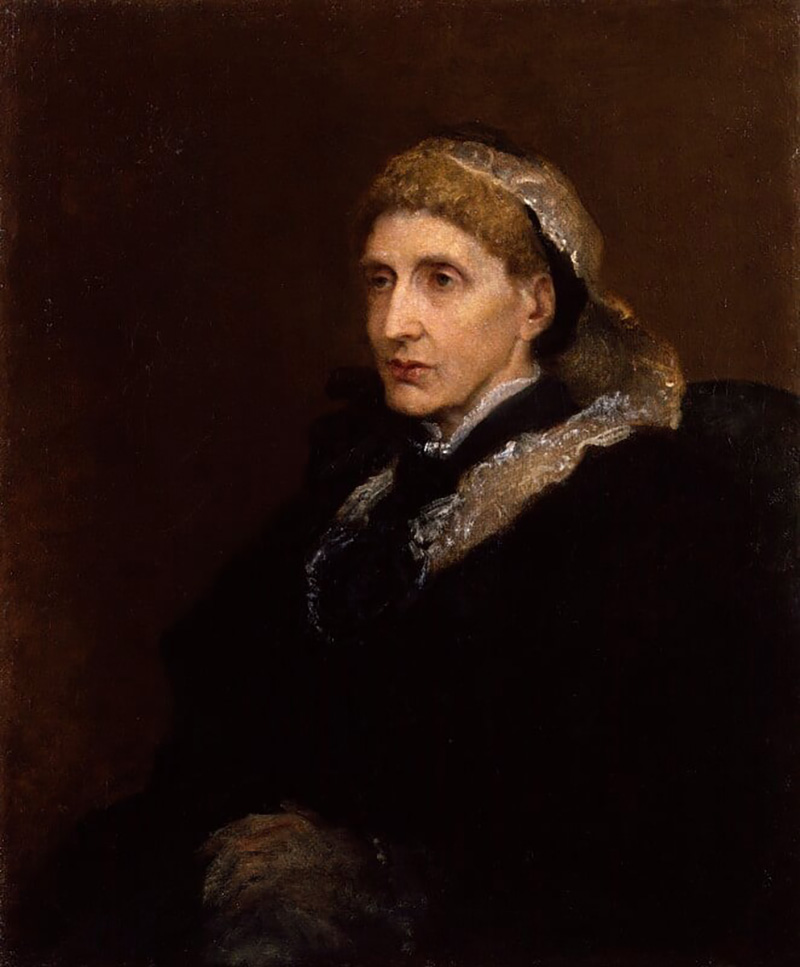
The prudery and power trips of the elites and campaigners policing Victorians were broadened into a judgement against an entire generation by 20th-century writers who derided their imagined forebears to present themselves as liberated, enlightened, and thoroughly modern. Early 20th-century artists, writers and intellectuals, particularly those of the Bloomsbury group, took pleasure in lampooning what they saw as outdated attitudes. Virginia Woolf scolded restrained Victorian sexuality to emphasize the freedom that she and the Bloomsbury Group wielded. Published in 1918, Lytton Strachey’s hugely popular Eminent Victorians thoroughly ridiculed some of the most famous Victorians, making sure to note their bumbling emotional repression. He told readers how Cardinal Henry Edward Manning never mentioned his wife after her death, which Strachey described as “the merciful removal of his wife” and how Thomas Arnold “was careful to refrain from an excess of feeling.” Over time, this accurate lambasting of elite prudery extended toward even those who fought against such attitudes. Laughing at the straitlaced views of the Victorian past became commonplace; in his 1928 book Famous Victorians I Have Known, poet Stephen Coleridge admitted the popular tendency “to look back at the Victorians with a superior smile.”
Approaching the Victorian era with this kind of smug condescension may well be fun, but it makes for bad history. In place of accurate depictions, we are left with misconceptions that mainly function to make us feel better about ourselves. These stereotypes about the past tell us far more about how we like to see ourselves in the 21st century. The myth of Victorians as sexually prudish should have been buried at Frogmore, alongside Victoria and Albert.